
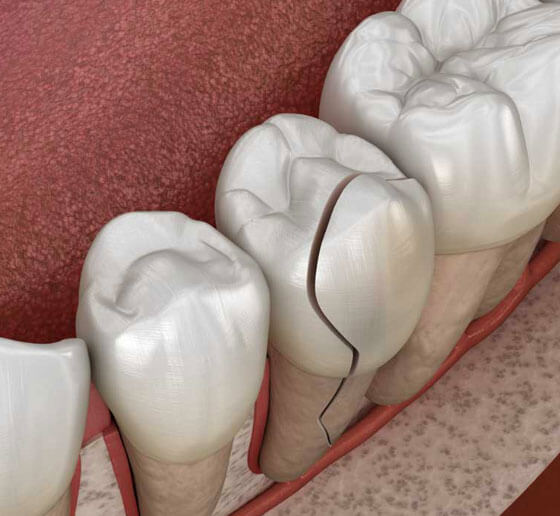
Treatment of Cracked Teeth in Portland, OR
Certain cracks in teeth are too tiny to be detected on X-rays. Sometimes the cracks are under the gum. These small cracks are known as "cracked tooth syndrome.” Cracked tooth syndrome is most common in lower back teeth (molars). This is because these teeth take on most of the chewing forces.
Some people grind or clench their teeth. These people may be more likely to have cracked tooth syndrome. Sometimes, a person's bite can exert excessive pressure on a single tooth. This can cause the teeth to crack.
Teeth that have large fillings might be more prone to cracking. Teeth that have undergone root canal treatment are weaker than other teeth and may also be more likely to crack. People with one cracked tooth are more likely to have others, either at the same time or in the future.

Symptoms
The tooth may hurt sometimes when you bite or chew. Sensitivity or pain can vary from mild to intense. It might be painful only when eating certain foods or biting in a particular way. You will not feel a constant ache, as you would if you had a cavity or abscess. The tooth may be more sensitive to cold temperatures.
If the crack gets bigger, a piece of the tooth can break. You may also develop an infection. This can happen in the gum around the fractured tooth. You might notice a bump on the gum near the tooth that resembles a pimple. This is known as a fistula.
Many people with cracked tooth syndrome have symptoms for months. Diagnosing cracked tooth syndrome can be challenging because the associated pain is unpredictable.
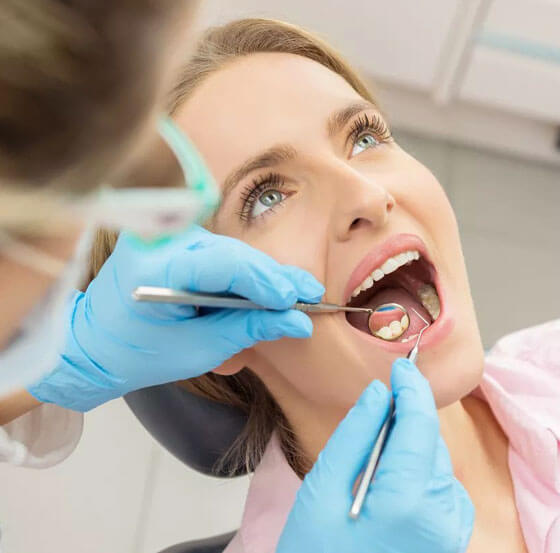
Diagnosis
Your dentist will examine your mouth and teeth, focusing on the tooth in question. He or she may use a sharp instrument called an explorer to feel for cracks in the tooth. Your dentist will also look at the gums around the tooth. You may have X-rays taken. But X-rays often do not show the crack.
Your dentist might employ a special instrument to examine the tooth. There are different kinds of tools. One looks like a toothbrush without bristles. It covers one part of the tooth at a time when you bite down. If you experience pain, it probably indicates a crack in that specific area of the tooth.
Your dentist might use a very bright light on the tooth. He or she may stain it with a special dye. If the tooth already has a filling or crown, your dentist may remove it in order to see the tooth better.
Frequently Asked Questions
What Are The Most Common Types of Cracked Teeth?
How Can I Tell if a Tooth Crack Needs Professional Dental Treatment?
Can Small Cracks be Treated Without a Crown?
Will a Cracked Tooth Eventually Break if Left Untreated?
How Soon Should I See a Dentist After Noticing a Crack?
Will I Still Need to Brush And Floss After Getting Sealants?
Testimonials

Crown and filling experience went better than I expected. It's normally a painful process for me. Staff is always friendly and easy to deal with. We appreciate that they offer us different options since we don't have dental insurance.

Ilus Ka
Everyone is so nice and friendly. If you’re looking for a new dentist and team, I highly recommend Bethany Dental. I’ve gone in a few times for anual cleanings and some cavity fillings and I’ve left satisfied every time.
Marlyne Rodriguez
The staff was very friendly. Dr. Austria was very friendly and asked me lots of questions and listened to me. He made my appointment easy and stress free. I would recommend going to this office for your dental care.
Marcia Reyes
I just spent a very relaxing (really!) 2.75 hours being prepped for a new crown and having 3 fillings put in. Honestly, except for a slight prick of the numbing needle, the whole procedure was painless. Dr.Austria and his staff were friendly, the atmosphere was calming, and I knew I was in good hands.
Caroline Arnold
They were super friendly and considerate to any pain I was having. The Dr. asked often if I was in any pain, and I didn't even feel the shot like I usually do at my other dentist. They do everything they can to make you comfortable. I definitely recommend going here.
Jordan Harris
I'm in the process of getting a post and crown. Right now I'm healing from my bone graft and every person at this practice continually goes out of their way to make sure I heal well and every thing goes as planned. There was a problem with my bone graft initially and Dr. Austria continues to spend extra time on my mouth to help me keep on healing, at no extra expense to me.
Heather Stevens
Dr. Austria is one of the kindest, most capable, and awesome dentists I’ve ever had. I have a moderate level of anxiety around any dental work that requires local anesthesia, and Dr. Austria did everything he could to put me at ease when I unexpectedly needed numbing. The dental assistants are awesome too, non-judgmental and sweet and supportive. I’m so glad we found Bethany Family Dental.

